
Arabian Hills Estate, Abu Dhabi
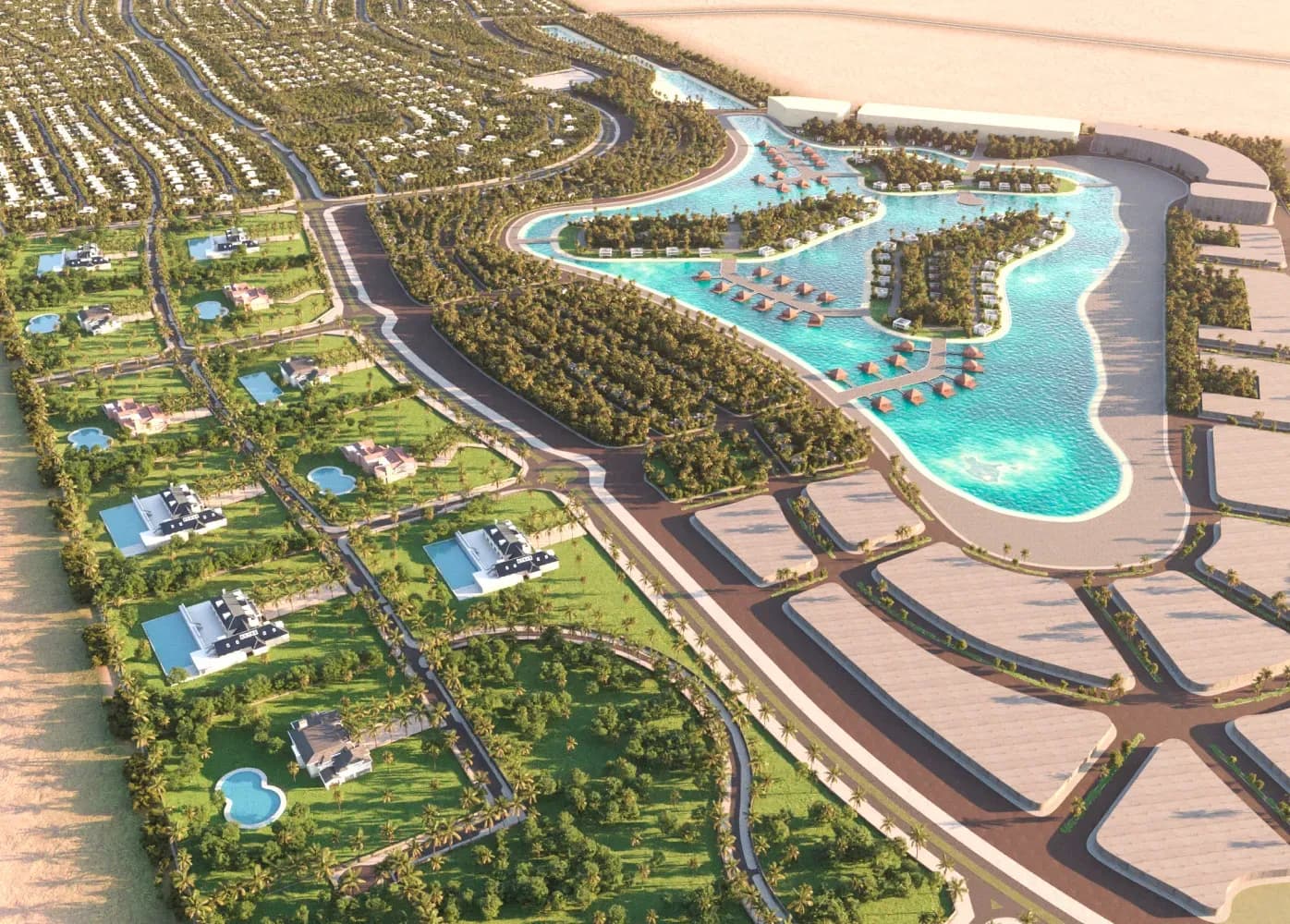
Arabian Hills Estate Area Summary
Arabian Hills Estate is a large off-plan residential development in Al Faqa, within Abu Dhabi’s Al Ain Region and close to the Dubai border. The site runs along the Dubai to Al Ain corridor, placing it between the built-up eastern side of Dubai and Al Ain city rather than near Abu Dhabi Island.
This is a plot-led project. Buyers choose residential land and build a villa, mansion or private estate within the developer’s construction rules. Plot sizes start at 12,000 sq ft and reach 132,000 sq ft, which is far larger than the land attached to a typical suburban villa.
The scale is huge. Arabian Hills Estate covers around 244 million sq ft and has been planned across 14 phases, with an estimated project value of AED 22 billion. Lagoons, equestrian facilities, parks, sports grounds, retail areas, schools, healthcare facilities and hotels form part of the master plan. Most are planned rather than open today.
That distinction is important. Arabian Hills Estate is not yet an established neighborhood where families can move into a finished villa, walk to a supermarket and send children to a nearby school. Buyers are entering a developing master community and should judge it through construction progress, plot registration, infrastructure delivery and the cost of building after the land purchase.
Key Features of Arabian Hills Estate
- Master-planned gated development in Al Faqa
- Around 244 million sq ft across 14 planned phases
- Residential plots open to buyers of all nationalities
- Villa plots measuring 12,000 to 20,000 sq ft
- Mansion plots from 20,000 to 50,000 sq ft
- Mega-mansion land ranging from 50,000 to 76,000 sq ft
- Estate plots reaching 132,000 sq ft
- Custom home construction within community design rules
- More than 48 facilities are listed in the current master plan
- Swimmable lagoons, a beach and several pool areas
- Equestrian facilities, horse trails and a planned polo club
- Parks, cycle routes, running tracks and a dog park
- Football, basketball, padel and tennis facilities
- Planned retail districts, schools and medical services
- A five-star hotel and spa is included in the wider proposal
- Current plot offerings are priced from about AED 1.67 million
- Handover for current off-plan listings is commonly shown as Q4 2027
Space drives the project. A 12,000 sq ft entry-level plot can hold a substantial family home, garden, pool, service rooms and several cars, depending on the permitted building coverage. At the upper end, estate plots are large enough for private compounds.
Arabian Hills Estate Location
Arabian Hills Estate lies in Al Faqa, beside the Dubai to Al Ain road corridor. The land falls within Abu Dhabi’s Al Ain Region, although property advertising often associates the development with Dubai because the emirate’s eastern districts are easier to reach than Abu Dhabi Island.
Dubai Outlet Mall is roughly 24 minutes away under normal road conditions. Dubai Silicon Oasis and Silicon Central Mall take about 27 minutes, while Dubai Mall and the Downtown Dubai area fall closer to 40 to 45 minutes. Both Dubai International Airport and Al Ain International Airport are around 44 minutes from the site in ordinary traffic.
The route is straightforward. Long sections of the Dubai to Al Ain road have few traffic lights, though speed limits, weather and peak traffic near Dubai can change the final part of the trip.
Central Abu Dhabi is much farther away. Someone working on Abu Dhabi Island should not choose the area based on a broad claim that the development lies “between Dubai and Abu Dhabi.” A weekday trial drive would give a far better picture.
Who Would Enjoy the Arabian Hills Estate Area?
- Buyers Who Want To Build Their Own Home: The plot format allows owners to choose a house design instead of accepting a standard developer floor plan.
- Large Families: The smallest land option still offers enough room for a spacious villa, outdoor areas and staff accommodation.
- Equestrian Households: Riding facilities, stables and trails form a major part of the proposed community plan.
- Dubai-Based Business Owners: The eastern side of Dubai can be reached without driving through central Abu Dhabi.
- People Seeking Large Private Grounds: Estate plots support compounds that would be difficult to find inside established city neighborhoods.
- Long-Term Property Investors: Buyers who can wait through construction may see value in entering before the wider community opens.
- Multi-Generational Families: One large plot may support a main residence, guest spaces and separate family areas, subject to approval.
- Owners With Several Vehicles: Large plots and broad internal roads fit households that need generous parking.
- People Who Spend Weekends Outdoors: Desert camping, cycling and horse riding suit the open surroundings around Al Faqa.
The project will not work for everyone. A buyer who needs a ready school, hospital, supermarket and office commute from the first day may find the current stage too early. The same applies to anyone looking for an apartment or a home that can generate immediate rent.
Detailed Features of Arabian Hills Estate
The plan follows a resort-style format built around water, open land and low-density housing. Lagoons run through sections of the development, while residential plots spread across broad internal roads rather than narrow rows of identical villas.
Owners do not receive a completed house with the land. They must plan and fund the building, appoint consultants and contractors, secure approvals, and follow the permitted design guidelines. Current sales material offers eight suggested home concepts, including Al Maha, Andalusia, Hacienda, Aurora and Qasr Al Waha. Buyers may use these as starting points rather than designing from a blank page.
That process adds freedom, but it also adds work. Plot cost is only one part of the budget. Architectural fees, approvals, soil testing, construction, landscaping, pool installation, boundary walls and interior fit-out can push total spending far above the initial land price.
Hotels in Arabian Hills Estate
There is no operating hotel inside Arabian Hills Estate at present.
A five-star hotel and spa form part of the proposed master plan. Until that opens, site visitors and future residents will need to book accommodation in Dubai, Al Ain or another desert development.
- Radisson RED Dubai Silicon Oasis: A useful choice for visitors combining a site appointment with meetings in eastern Dubai.
- Premier Inn Dubai Silicon Oasis: A simpler business stay within reach of the Dubai to Al Ain road.
- Al Habtoor Polo Resort: Suits guests who prefer an equestrian setting closer to Dubai’s outer residential districts.
- Al Ain hotels: Better for visitors arriving from the Abu Dhabi side or spending time in Al Ain city.
- Desert resorts: Bab Al Shams and Al Maha provide destination stays, though neither works as everyday accommodation for the project.
Anyone attending an early morning site visit should check the drive before booking. A hotel that looks nearby on a regional map may still require 30 to 45 minutes on the road.
Malls Near Arabian Hills Estate
Retail forms part of the long-term master plan, but Arabian Hills Estate does not yet have an operating community mall.
- Dubai Outlet Mall: Around 24 minutes away and the nearest large shopping destination on the Dubai side.
- Silicon Central Mall: Roughly 27 minutes away, with a hypermarket, restaurants, shops and family facilities.
- Dubai Mall: About 40 minutes from the site in light traffic.
- Al Foah Mall: An option towards Al Ain for residents traveling in the opposite direction.
- Local Al Faqa shops: Small groceries and roadside services cover basic needs, but the choice remains limited.
Dubai Outlet Mall will probably handle larger shopping trips during the community’s early years. For groceries, owners should check which supermarket can deliver to the exact plot zone once homes become occupied.
Parks in Arabian Hills Estate
Outdoor space is one of the development’s strongest planned features. The proposal includes open parks, picnic areas, nature trails, a Zen garden, playing fields and landscaped sections around the lagoons.
A dog park also appears in the current facilities list. That should appeal to owners who struggle with pet restrictions in apartment buildings, though each household will still need to follow community rules on leads, waste and animal access.
The planned lagoons carry the biggest visual impact. Marketing material shows swimmable water, beach areas, children’s pools, lounge pools and aqua-park facilities. Buyers should confirm which water feature belongs to their phase, since a lagoon shown on the full master plan may stand several kilometers from a particular plot.
Walking distance requires the same check. On a project of this size, the words “near the park” can cover a long stretch of road.
Things To Do in Arabian Hills Estate
- Ride or train at the planned equestrian centre
- Walk beside the lagoons once public areas open
- Use the cycle and running tracks
- Spend time at the community beach
- Play padel, tennis, basketball or football
- Visit the planned adventure parks
- Use picnic areas and open lawns with family
- Take children to the proposed aqua-park zones
- Play a short round at the mini-golf facility
- Book spa treatments at the future hotel
- Camp or drive through the surrounding Al Faqa desert
- Shop at Dubai Outlet Mall
- Visit attractions in Dubai Silicon Oasis
- Drive to Al Ain for parks, museums and Jebel Hafeet
Many activities remain tied to future construction. During the current development stage, desert trips and drives towards Dubai or Al Ain offer the main leisure options.
Accessibility and Transport in Arabian Hills Estate
A private car will be essential. Arabian Hills Estate covers a vast site, and even internal trips between a home, school, sports center, and retail area may be too long for walking during summer.
The Dubai to Al Ain corridor provides the main external connection. Al Showaib Road adds another regional route, while drivers heading deeper into Dubai can continue towards Al Khail Road and the Dubai to Hatta road network.
Plot owners should ask about access in two stages. First, check whether the main road into the correct phase is open. Then check whether the smaller road beside the plot has finished paving, lighting, drainage and utility work.
Parking should not create the same pressure found in apartment districts. Plot dimensions allow owners to build private garages, shaded bays and visitor parking inside the boundary, subject to planning approval.
Metro Stations in Arabian Hills Estate
Arabian Hills Estate has no metro station.
Dubai Metro does not extend to Al Faqa, and no confirmed station opening date has been published for the development. Owners will need to drive towards Dubai before reaching the nearest urban transport network.
Rail claims deserve caution. A regional transport announcement does not automatically mean a passenger station will open beside a specific project. Buyers should rely on a named station, an official map and a confirmed delivery program before treating future rail access as part of the purchase decision.
Bus Stations in Arabian Hills Estate
There is no established community bus network inside Arabian Hills Estate at present.
Public bus coverage around Al Faqa is limited compared with central Dubai, Al Ain or Abu Dhabi Island. Future services may arrive as the population grows, though buyers should not base a current purchase on that possibility.
Private school buses, staff transport and community shuttles could become more useful during the first occupied years. None should be assumed until the operator confirms the route.
Taxis and app-based cars may accept trips to the site, but return availability could be uneven. A resident without a driving licence would face a difficult daily routine here.
Key Landmarks Near Arabian Hills Estate
- Dubai Outlet Mall: Around 24 minutes
- Dubai Silicon Oasis: Roughly 27 minutes
- Silicon Central Mall: About 27 minutes
- University of Dubai: Around 27 minutes
- Dubai Creek Harbour: Roughly 36 minutes
- Dubai Mall: About 40 minutes
- Rashid Hospital: Around 42 minutes
- Dubai International Airport: Approximately 44 minutes
- Al Ain International Airport: Around 44 minutes
- Downtown Dubai: Roughly 40 to 45 minutes
- Al Ain City: Reached by continuing east along the main road
- Al Faqa: The surrounding rural settlement and desert district
These are approximate road times, not fixed promises. A plot near an outer gate may save several minutes, while one deep inside a later phase could add a longer internal drive.
Education Near Arabian Hills Estate
Schools are planned within Arabian Hills Estate, but the current development does not offer a complete operating education network.
Families moving during the first occupied phase may need to use campuses in Dubai’s eastern communities, Al Ain or another nearby district. That could create a long school run, especially when a bus must enter the development and collect children from several widely spaced plots.
Parents should check three points before buying: when the planned school will open, which year groups it will accept and whether an outside campus will send buses to the relevant phase. A broad promise of “schools within the community” does not answer any of those questions.
Nurseries Near Arabian Hills Estate
A nursery or daycare facility forms part of the wider community proposal, though no confirmed operating nursery inside Arabian Hills Estate has been announced.
Early residents may need to drive towards Dubai Silicon Oasis, Academic City or Al Ain. Nursery transport is less common for babies and younger toddlers, so a parent or caregiver may have to make the journey twice each day.
Before choosing a plot, families should ask for the exact site of the planned early-years facility. On a 244 million sq ft development, living inside the same master community does not always mean a short walk.
Primary and High Schools Near Arabian Hills Estate
The master plan includes schools intended to serve the future resident population. Curricula, operators, fee levels and opening dates have not all been confirmed publicly.
Until those details arrive, families can examine schools in:
- Dubai Silicon Oasis
- Dubai Academic City
- Nad Al Sheba and nearby eastern Dubai districts
- Al Ain’s established residential communities
- Other settlements along the Dubai to Al Ain route
A daily drive of 25 to 40 minutes may look acceptable on paper. Two school runs each day change the calculation. Parents should include fuel, bus charges, work timings and the age of the child before treating an outside campus as a long-term solution.
Universities Near Arabian Hills Estate
- University of Dubai: Around 27 minutes from the project area.
- Dubai Academic City: Offers a wider group of universities and colleges within driving distance.
- United Arab Emirates University: Located in Al Ain and reachable along the main intercity corridor.
- Al Ain University: Another higher education choice in Al Ain city.
- Dubai universities: Campuses in Academic City and Silicon Oasis will suit students travelling towards Dubai.
University students will need a car or reliable family transport. Public transport would be difficult during the early years of development.
Healthcare Facilities Near Arabian Hills Estate
Medical services are included in the planned community, but Arabian Hills Estate does not yet have a full operating healthcare district.
SEHA lists a clinic in Al Faqa for local primary care. Opening hours and available departments should be checked before a visit, particularly for children, maternity care or ongoing specialist treatment.
Larger hospitals require a drive. Current location guides place Rashid Hospital at about 42 minutes and Latifa Hospital near 40 minutes from Dubai. Al Ain also has major government and private hospitals, though the travel time depends on the part of the city.
Residents should identify the nearest emergency department before moving. A planned clinic inside the development may handle routine consultations later, but it may not provide surgery, trauma care or advanced imaging.
Insurance networks also need checking. A policy accepted in Dubai may not cover every Al Ain or Abu Dhabi provider on the same terms.
Properties in Arabian Hills Estate
Arabian Hills Estate currently centers on residential land rather than completed homes.
Four main plot categories are available:
- Villa Plots: From 12,000 to 20,000 sq ft
- Mansion Plots: Between 20,000 and 50,000 sq ft
- Mega-Mansion Plots: From 50,000 to 76,000 sq ft
- Estate Plots: Between 76,000 and 132,000 sq ft
Current sales material lists prices from about AED 1.67 million, with some new-release plots advertised from AED 120 per sq ft. Resale listings can show lower rates, including plots near AED 55 per sq ft, depending on the phase, payment status, seller and location.
Those figures should not be compared without reading the details. One listing may require immediate cash, while another includes a longer developer payment schedule. Corner land, lagoon proximity and plot shape can also move the price.
The official sales partner currently advertises payment options of 18, 24 or 36 months, beginning with a 10% booking payment. Other project listings show a 50/50 structure with part of the price paid after handover. The contract, not the advert, decides what the buyer owes.
Construction cost comes next. Buyers should collect early estimates for:
- Architectural and engineering design
- Government and developer approvals
- Soil tests and land surveys
- Main villa construction
- Staff rooms and service buildings
- Swimming pool and water features
- Landscaping and irrigation
- Boundary walls and gates
- Air conditioning and smart-home systems
- Interior finishes, kitchens and wardrobes
- External utility connections
- Project management and inspections
The build period also needs room. A plot handover does not mean a house can be occupied immediately. Design, approvals and construction may take several more years.
Before paying, the buyer should verify the plot through the Abu Dhabi property registration system, review the sales and purchase agreement, confirm the approved phase and ask exactly which infrastructure has reached the boundary.
Future Plans for Arabian Hills Estate Area
Arabian Hills Estate is planned as a 14-phase community, so development will continue well beyond the first plot handovers. The full proposal includes homes, apartments, lagoons, schools, healthcare services, retail districts, hotels, sports grounds, equestrian facilities and large public parks.
Road and utility work has already moved forward in parts of the site. A March 2025 project update reported that Zone 2 had passed 50% completion for roads and infrastructure. That zone covers about 2.53 million sq m, with 748 residential plots, 33.5 km of internal roads and 306 km of electricity and utility networks.
Two Drake & Scull contracts worth more than AED 1 billion are scheduled for completion by the end of 2027. Current plot listings commonly state Q4 2027 as the handover point, although dates can differ by zone and contract.
Public records and sales claims have not always described progress in the same way. Reporting in 2025 found separate project entries with different completion percentages, while the current sales partner says Phase 1 has sold out and been handed over, with roads and infrastructure in place for the new release. Buyers should verify the exact registration attached to their plot rather than relying on a general phase name.
Future owners should also ask which facilities will open with their phase. A completed road does not guarantee that the nearest school, clinic, retail area or lagoon will be ready at the same time.
