Dubai Property Prices in 2026: Will Prices Rise or Stabilise?

Updated: Sep 07, 2026, 02:35 PM

Dubai property prices are likely to stabilise in some communities and rise moderately in stronger segments in 2026. Prime waterfront areas, established villa communities, and well-connected family locations may hold firm because buyers still want limited-supply homes with long-term use value.
Dubai property prices in 2026 are climbing in strong locations and levelling out in supply-heavy ones, and honestly, that's a buyer's dream setup. Prime areas keep their momentum, while other pockets open up room to negotiate.
On the other side, areas with heavy new apartment handovers or aggressive off-plan pricing are giving buyers room to negotiate, and that's where some of the best deals are quietly sitting.
So the honest answer isn't "rise" or "fall." It's "where you buy decides everything."
A ready villa in an established family community will likely outperform a newly launched apartment in a tower-heavy district with thousands of units about to hand over. Dubai real estate forecast points to selective growth, with Dubai housing market trends showing serious buyers paying closer attention to location, yield, developer track record, and future supply.
Dubai entered 2026 with serious transaction momentum, but buyers are doing their homework before signing. That's actually a healthy thing, not something to worry about. The market has matured after the fast run from 2022 to 2025, and a maturing market usually means better deals for the buyer who pays attention.
The strongest official signal came from Q1 2026. The Dubai Land Department reported AED 252 billion in real estate transactions during the quarter, up 31% year-on-year by value. It also recorded 60,303 real estate transactions, up to 6% compared with Q1 2025. That tells us demand remains active, even as buyers question pricing more closely.
This is the Dubai real estate market in 2026 in simple terms: the market still has liquidity, but buyers have stopped paying premium prices for average projects. Good news for anyone shopping smart.
Investors now compare:
At Driven Properties, we treat this as a selection market. We don't judge a listing by its brochure price. We look at the entry cost, how easily it rents, how fast it resells, the building's quality, and what other units will compete with it down the road.
That's where a real Dubai property market forecast helps more than broad headlines. Some assets keep climbing. Some take a pause. And a few open up a buying window that's worth jumping on.
Dubai prices may continue to rise in 2026 because demand is still supported by population growth, strong investor interest, and Dubai’s long-term economic plans. Prime locations, waterfront homes, villas, and established family communities may stay firm because supply remains limited in these segments.
Buyers are also shifting toward homes with real end-user value, so well-located properties with rental demand and resale strength may continue to see moderate price growth.
Dubai continues to attract professionals, founders, investors, and families. This keeps rental and ownership demand alive. The city crossed the 4 million population mark in 2025, a major milestone that supports the long-term housing story.
Population growth does not push every project upward. But it supports well-located homes near schools, business districts, hospitals, parks, and transport links.
Example: a family moving to Dubai for a 5-year work plan may prefer buying a townhouse or villa instead of paying high annual rent with yearly increases. That type of end-user demand gives the market a stronger base than short-term flipping.
Prime areas cannot create unlimited new land. That is why scarcity still protects many established locations.
Stronger segments may include:
This does not mean every unit in these areas deserves a premium. Layout, view, building age, service charges, and entry price still affect returns. But mature communities with limited future stock often perform better when the broader market slows.
Dubai’s D33 Economic Agenda aims to double the size of the economy by 2033 and position the city among the top 3 global cities for living, investing, and working. That long-term direction supports confidence in housing, business formation, and migration-led demand.
This supports property investment in Dubai, but it does not remove pricing risk. A good city can still have overpriced buildings. Smart buyers separate the Dubai growth story from the individual property decision.
Some Dubai communities are likely to see prices level off as new housing supply arrives, especially in apartment-heavy zones. After a strong run from 2022 to 2025, buyers are also being more deliberate, comparing rental yield, service charges, location, and nearby ready stock before they commit.
The result? Areas with heavy handovers, lookalike towers, or stretched off-plan pricing will see slower growth and more negotiation room. That's exactly where buyers can step in and walk away with a great deal.
The biggest reason for caution is supply. Fitch previously projected a moderate correction of up to 15% through 2H 2025 and 2026, mainly because of a large delivery pipeline. The warning pointed to about 210,000 units expected over two years, which is far higher than the previous delivery pace.
That does not mean prices fall everywhere. Supply pressure hits hardest when many similar units enter the same location at the same time.
For example, if several towers hand over in one apartment-heavy community within a short period, landlords may compete harder on rent, furniture packages, payment flexibility, and resale pricing.
This is where the Dubai housing supply in 2026 becomes one of the most important buyer checks.
After years of strong growth, buyers now ask better questions.
They compare:
This behavior can slow price growth in communities where developers pushed launch prices too high. A long payment plan may look attractive, but it can hide an inflated entry price.
Heavy apartment supply can create a short-term imbalance. That does not answer whether Dubai property prices fall with a simple yes. It means some communities may offer better negotiation rooms.
A Dubai property price correction is more likely in locations with too many similar units, weak transport access, thin tenant demand, or launch prices above nearby ready homes.
The strongest buyer question in 2026 is not “Is Dubai rising?” It is “Will this exact property still look well-priced when nearby units hand over?”
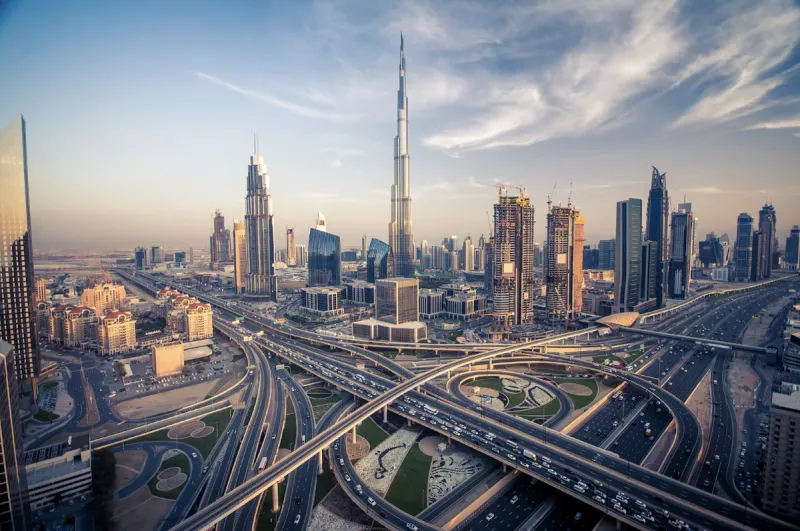
Villas and townhouses may perform better in 2026 because Dubai still has a limited family-sized supply in mature communities, while demand from long-term residents remains strong. Apartments may still perform well in prime, walkable, and high-rental-demand areas, but performance will depend more on location, building quality, service charges, and future handovers. In simple terms, villas may stay more resilient, while apartments may become more area-specific.
Villas and townhouses may continue to perform better because families still want space, privacy, parking, outdoor areas, and established community facilities.
The 2026 outlook from one market forecast projected citywide residential capital value growth of around 10%, with villas and townhouses expected to outperform apartments. It projected villa growth at 17.7% compared with 7.4% for apartments, while rental growth may stabilise as rents approach affordability ceilings.
That makes Dubai villa prices 2026 a strong watch area, especially in mature communities with limited new villa stock.
Apartments can still perform well, but location will carry more weight. A well-planned apartment near a metro station, business hub, waterfront, or strong rental district may hold better than a similar unit in a community with heavy future supply.
This is why Dubai apartment prices 2026 should not be read as one broad category. Prime walkable apartments and oversupplied apartments may move in different directions.
A compact unit in a high-demand rental zone may still deliver steady occupancy. A larger unit in a tower-heavy area may need more discounting if many handovers arrive together.
Off-plan prices may stay strong in branded, waterfront, and well-located projects, but buyers may become more selective in 2026. Ready properties may attract more serious investors because they offer clearer pricing, actual rental income, known service charges, and immediate resale comparison. So, off-plan can still work with the right developer and entry price, while ready property may feel safer for buyers who want lower uncertainty.
Dubai off-plan property 2026 demand remains active, especially for branded residences, waterfront launches, master communities, and projects with flexible payment plans. But off-plan buyers need stronger discipline now.
Before buying, compare the launch price with ready homes nearby. If an off-plan unit costs more than a completed unit with proven rent, the premium must make sense through location, view, developer quality, payment structure, or future scarcity.
Ready homes give buyers visible numbers. You can check actual rent, current service charges, building condition, resale comparables, and occupancy demand.
That is why Dubai's ready property prices may become more important in 2026. Ready units also suit investors who want immediate rental income instead of waiting through construction.
Recent reporting suggests some Dubai handovers scheduled for 2026 may move into 2027 due to regional conflict, supply-chain pressure, higher costs, and tighter financing. Reports also pointed to possible 6 to 9-month project delays in affected cases.
This can cut both ways. Delays may reduce near-term supply pressure in some areas. But they may also make buyers more cautious with under-construction projects.
At Driven Properties, we usually ask one hard question before advising on off-plan: if the handover moves by 6 months, does the investment still work? If not, the buyer may need a ready option or a stronger developer.
Dubai’s 2026 housing market may not move in one straight line. Buyers should watch pricing speed, community-level supply, rental demand, and end-user preference before making a decision. The table below shows the key trends that may shape buying, negotiation, and investment returns in the coming year.
Trend | What It Means for Buyers | Likely Impact |
Slower price growth | The market may move away from fast jumps | More room for negotiation in some areas |
Area-by-area movement | Community, supply, and property type decide performance | Better assets separate from weak stock |
Family community demand | Schools, parks, clinics, and road access attract end users | Villas and townhouses may stay firmer |
Rental growth cooling | Rent increases may slow as affordability limits appear | Yield checks become more important |
More value-based buying | Investors compare price, rent, fees, and exit demand | Overpriced launches face pressure |
These Dubai housing market trends show one thing clearly: 2026 is not a year for lazy buying. It is a year for sharper due diligence.
The Dubai property prices in 2026 picture may look strong in headlines, but the buyer’s result will depend on the entry price. A good property bought too high can still underperform. A plain property bought at the right discount in a rental-heavy location can still work.
A citywide crash is not the main forecast for 2026. A more realistic outlook is moderate growth in strong areas, stabilisation in maturing communities, and possible correction in oversupplied pockets.
Several factors reduce the chance of a broad crash:
The market also has segments with real owner-occupier demand. That helps reduce pure speculation risk in established communities.
Corrections may appear in:
Searches around will show that Dubai property prices rise, and Dubai property price forecasts often miss this split. Palm Jumeirah, Emirates Living, and Dubai Hills may not behave like an outer apartment-heavy district with several similar launches.
Investors should not buy only because Dubai has momentum. They should buy when the individual asset works.
Example: an investor buying a ready 1-bedroom apartment in a proven rental district may earn income even if capital growth slows for a year.
This is where Dubai real estate investment 2026 becomes more strategic. The question is not only “What will the market do?” The better question is “Can this asset survive a slower market?”
A buyer looking at an off-plan unit in a supply-heavy district may wait, negotiate, or choose a ready unit with proven rental returns.
The Dubai rental market in 2026 will also influence this decision. If rents cool in some areas, gross yield promises will need more careful checking.
Prime waterfront areas, established villa communities, family-focused master communities, and locations near business hubs may stay more resilient in 2026. These areas usually have stronger end-user demand, limited future supply, better lifestyle facilities, and easier resale potential. In contrast, newer apartment-heavy communities with large handovers may stabilize or offer more negotiation room.
The best areas to buy property in Dubai 2026 will likely share a few traits:
Resilient areas may include mature villa communities, prime waterfront districts, and established mixed-use neighborhoods where end users already want to live.
Price stabilisation may appear in the following:
A villa in a mature, low-supply community may show stronger price stability than a newly handed-over apartment in a tower-heavy district.
That is the more useful Dubai property price forecast: do not forecast the city only. Forecast the exact community, tower, view, layout, supply pipeline, and likely tenant base.
Prices may increase moderately in strong locations, especially prime areas, villas, townhouses, waterfront homes, and communities with limited supply. Growth may slow down compared to the sharp increases seen in previous years.
Some areas may see price corrections or slower growth, especially locations with heavy new supply or overpriced off-plan launches. A citywide fall is not the only likely scenario. Performance may vary by community and property type.
The forecast points toward selective growth, more stable rental movement, stronger end-user demand, and more careful buyer behavior. Quality assets may perform better than speculative purchases in weaker locations.
Villas may outperform apartments because of limited supply and strong family demand. Apartments can still do well in prime, walkable, and high-rental-demand communities, but they may face more pressure in supply-heavy districts.
Ready property may suit buyers who want rental income, pricing clarity, and lower handover uncertainty. Off-plan can still work if the developer is reliable, the location is strong, and the launch price compares well with nearby ready homes.
Established communities, prime waterfront locations, and family-focused villa districts may remain more stable. Areas with large apartment handovers may see more competition between sellers and landlords.
Homebuyers should not wait only for a market-wide drop. They should compare transaction prices, negotiate properly, and focus on homes that fit their long-term living needs. Waiting works only if the target area has a real supply or pricing issue.
Dubai remains attractive for long-term investors, but 2026 needs a selective approach. Rental yield, location, developer quality, supply risk, service charges, and resale demand should guide every purchase decision.
Dubai property prices in 2026 are more likely to move into a balanced phase than crash or boom across the whole city. Strong locations may still rise. Mature communities may stabilise. Oversupplied or overpriced areas may face negotiation pressure.
For investors, 2026 is not a year for blind buying. It is a year for price comparison, yield checks, developer review, and long-term planning. For homebuyers, the market may offer better negotiation opportunities than before, especially where new supply is rising.
The final answer: the market may stabilise selectively and rise moderately in stronger segments. Work with a team that can compare communities, pricing, rent demand, and future supply before you commit. For a sharper buying plan around Dubai property prices, speak with us at Driven Properties.

Group Chief Financial Officer
Emre Okay is the Group Chief Financial Officer of Driven Group, a diversified real estate platform comprising Driven Properties, one of the UAE's most awarded and largest real estate brokerages; Lamar Holding, the Group's property development arm with over USD 5 billion in active gross development value; Driven Property & Asset Management, which manages more than 8,000 units across the UAE and provides owners association services; a real estate investment portfolio with co-invested special purpose vehicles holding approximately USD 1 billion in assets; and a venture portfolio of more than 15 minority investments.
Emre holds an MBA from Harvard Business School and brings over 15 years of international experience across investment banking, private equity, management consulting, and corporate finance. Prior to joining Driven, he held senior finance leadership roles at Amazon, where he led financial planning, strategic investments, operational optimization, and growth initiatives across multiple business units in Europe and the Middle East. Before Amazon, he worked in mergers and acquisitions at UBS in New York and spent several years in private equity investing across Europe and the Middle East, advising and investing in companies across a range of industries.
His expertise spans corporate finance, capital allocation, investment evaluation, commercial finance, strategic planning, and the digitalization of business performance tracking and decision-making. At Driven Group, Emre leads fund investment decisions and oversees the Group's financial strategy, governance, capital planning, and business performance, supporting the continued growth and expansion of the organization's operating businesses and investment platforms.