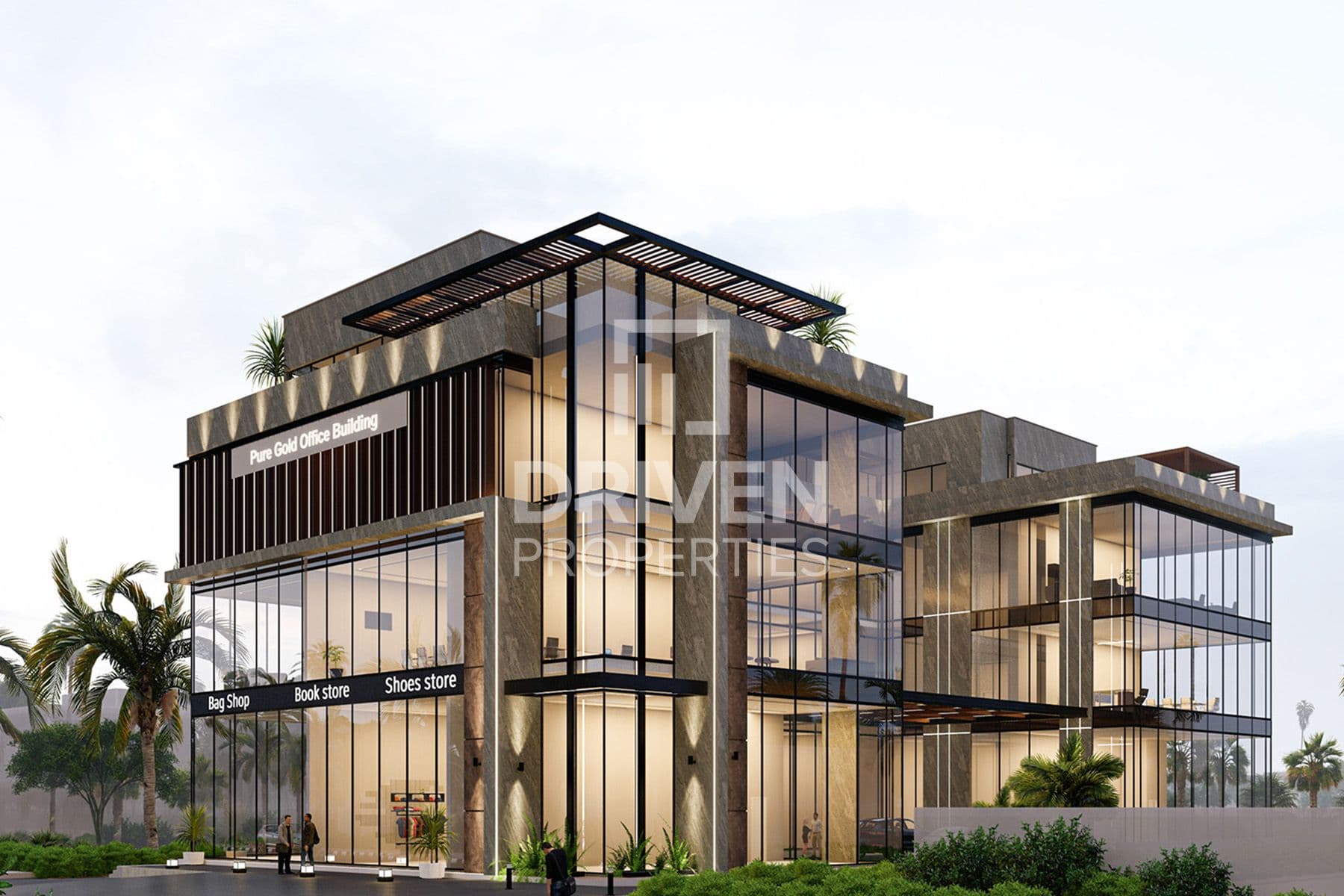
A growing company may need a small fitted office near the metro. A retailer may care more about passing traffic, signage, and parking. A logistics operator will ask about loading bays, ceiling height, power capacity, and truck access before discussing the view.
This is why commercial properties for rent in Dubai cannot be compared through rent alone. The unit must support the activity written on the company’s trade licence. It also needs to work for staff, customers, deliveries, approvals, and the way the business plans to operate over the next few years.
Dubai offers offices, shops, warehouses, showrooms, commercial villas, business centres, full floors, and standalone buildings. Each category has a different cost structure. Lease terms vary too.
Commercial leasing gives a business access to an established location without paying the full purchase cost at the start. The tenant can choose an area that matches the company’s current requirements, then relocate or expand when the lease ends.
The search should begin with the licensed activity. A consultancy, restaurant, medical clinic, trading company, and car workshop cannot use the same type of unit without checking building rules and authority approvals.
Jurisdiction also needs attention. Mainland companies generally search across mainland commercial districts. Free zone entities often need premises approved by their licensing authority. A company should confirm this position before paying a booking deposit, especially when the preferred unit falls outside its registered free zone.
Commercial leases normally state the annual rent, payment schedule, permitted activity, renewal terms, fit-out conditions, maintenance duties, notice period, and deposit rules. Read every schedule attached to the agreement. A short clause about signage, air-conditioning, or reinstatement can add a high cost later.
Commercial space in Dubai comes in many forms. A small consultancy may need a fitted office near the metro, while a trading company could require a warehouse with loading access, higher power, and room for stock.
Office stock ranges from compact serviced rooms to full corporate floors. Tenants can choose shell-and-core, fitted, furnished, partitioned, or managed space.
A fitted office saves preparation time, though an old fit-out may need electrical work, fresh flooring, or new data cabling. Shell-and-core space gives the tenant more design control. It also brings contractor costs, approvals, and a longer move-in period.
Retail units suit salons, cafés, pharmacies, supermarkets, boutiques, laundries, and customer-facing service businesses. Ground-floor access helps, but frontage alone does not guarantee sales.
Check the permitted activity, exhaust route, grease trap, gas connection, signage rights, delivery access, and nearby parking. Food and beverage tenants usually face more technical checks than a standard shop operator.
Warehouses serve storage, distribution, production, e-commerce fulfilment, and light industrial work. A tenant should inspect clear height, floor load, loading doors, power supply, fire systems, office area, and access for large vehicles.
Some listings use the word warehouse for units that only allow storage. Manufacturing, food handling, carpentry, chemicals, and automotive work may require separate approval.
Showrooms are built around visibility and customer presentation. They often work for vehicles, furniture, appliances, building materials, and premium home products.
Road exposure raises rent. So do corner frontage, higher power, dedicated parking, and combined showroom-and-warehouse layouts.
Commercial villas may suit nurseries, clinics, wellness businesses, training centres, restaurants, and professional offices, subject to approval. Residential appearance does not automatically permit commercial activity.
Tenants should verify parking, neighbour restrictions, accessibility requirements, fire compliance, and whether structural changes are allowed.
A serviced office can help a new company begin work without arranging furniture, reception staff, meeting rooms, internet, or daily maintenance. Contracts may offer monthly or annual terms.
Check whether the package supports licence issuance or renewal. Ask how many visas the space can support, whether the office is exclusive, and which services carry extra charges.
A polished lobby can attract attention during a viewing. Daily operating details deserve a closer look.
Start with the people who will use the property. Count staff, visitors, delivery vehicles, stock movement, meeting rooms, equipment, and future hires. A unit that feels large when empty may become tight after desks, storage, server cabinets, and reception furniture arrive.
Review these points before making an offer:
Location should follow the customer base and operating model. A legal firm may prefer a recognised business address. An online retailer may save money by moving its back-office team away from a premium commercial tower. A showroom needs visibility. A warehouse needs reliable vehicle access.
The best area depends on the work carried out there. Business Bay attracts office-based firms, Al Quoz suits workshops and showrooms, and Jebel Ali works better for companies linked to freight, storage, or port activity.
Business Bay has one of Dubai’s largest selections of offices and retail units. It attracts consultancies, technology firms, property companies, financial services, and regional headquarters.
The area provides central access, modern towers, hotels, restaurants, and connections to downtown Dubai. Parking allocation and peak-hour traffic need close review.
DIFC serves financial institutions, legal firms, investment companies, and professional service providers that require an address within its regulatory jurisdiction.
Grade A offices command higher rents. Companies also compete for fitted units because they shorten the setup period.
JLT attracts companies looking for office towers, metro access, dining options, and DMCC licensing. Unit quality can differ from one cluster and tower to another.
Inspect lift capacity, visitor parking, chiller arrangements, and the age of the fit-out before agreeing to the rent.
Sheikh Zayed Road works well for companies that value a recognised address and direct metro access. The corridor includes offices, showrooms, clinics, and customer-facing units.
Road visibility can be excellent. Entry routes and visitor parking are less predictable in some older buildings, so test both before signing.
Older business districts remain active among trading companies, travel firms, shipping businesses, wholesalers, and professional offices. Rental options can be lower than in newer corporate districts.
Building conditions vary widely. Some units offer generous floor areas but limited parking or ageing common facilities.
Al Quoz supports warehouses, showrooms, studios, workshops, galleries, production companies, and last-mile operations. It also offers central access to many residential and commercial districts.
Permitted use, power load, civil defense compliance, and road entry should be checked properly by the property.
DIP suits distribution firms, manufacturers, service companies, warehouses, and large-format showrooms. Many tenants choose it for bigger floor plates and access to southern Dubai.
A company should check whether the premises fall under the right licensing and approval authority before agreeing to fit-out work.
Jebel Ali serves port-linked trade, manufacturing, freight, and regional distribution. Dubai South supports aviation, e-commerce, cargo, and businesses planning around Al Maktoum International Airport.
Both areas offer larger commercial and logistics units. Distance from staff housing and customer locations can increase transport costs, even when the rent appears attractive.
Commercial rent changes with floor area, fit-out quality, location, power supply, frontage, parking, and lease length. Portal ranges can look unusually wide because the same category may include a desk-sized business centre package and an entire corporate building.
Property Category | Current 2026 Asking Price Indicators | What Changes the Rent |
Offices | One current listing index places offices between AED 800 and AED 23,790,250 per year, with an asking average of AED 328,361. Another records an entry point near AED 5,000, an average of AED 443,000, and large premium offices reaching AED 14,000,000. | Tower grade, fit-out, view, metro distance, parking, floor size, and licence jurisdiction |
Retail Shops | Current shops range from AED 10,000 to AED 9,500,000 per year, with an asking average near AED 477,173. A second index places entry-level annual rent near AED 30,000 and the average close to AED 392,000. | Footfall, frontage, activity approval, outdoor area, parking, exhaust, and community occupancy |
Warehouses | Broad asking ranges run from AED 9,075 to AED 31,502,900 per year, with an asking average of about AED 1,025,880. Another current index places yearly options from AED 15,000 to AED 1,460,000. | Size, power, ceiling height, yard area, loading bays, temperature control, and industrial approval |
Showrooms | Available showrooms range from AED 99,000 to AED 20,000,000 per year, with a current asking average near AED 1,443,175. | Main-road exposure, glass frontage, parking, floor area, power, and attached storage |
Commercial Villas | Current commercial villa listings range from AED 330,000 to AED 6,000,000 per year, with an asking average near AED 1,265,504. | Approved activity, plot size, parking, road position, property condition, and modification rights |
These figures show asking prices, not guaranteed closing rents. Very low entries may refer to desks, shared facilities, small storage arrangements, or short-term products. The highest figures often cover full floors, compounds, large warehouses, or flagship premises.
Buying a commercial unit can tie up a large share of a company’s cash before the doors even open. There may be a down payment, registration charges, finance costs, and renovation work to cover. Renting leaves more of that money available for payroll, stock, equipment, advertising, or the first few months of operating expenses.
Plans can change quickly as well. An office that suits a team of 8 may feel cramped after 2 new departments are hired. A shop may draw strong daytime traffic but remain quiet after 6 pm. In another case, a distributor may need to move closer to Jebel Ali after taking on a major shipping contract.
A lease gives the business time to see how the address performs. If the premises continue to work, the tenant can discuss a renewal. When parking, access, rent, or floor area becomes a problem, the company has the option to move once the agreed notice period has been served.
Prime districts are another reason companies rent. An office in DIFC or a showroom on Sheikh Zayed Road may be affordable under an annual lease, while purchasing a similar unit could require a far larger commitment. The tenant does give up some control, particularly over alterations, future rent, and renewal terms, so the contract needs a careful read.
The search should begin before the first property viewing. A business needs a working brief that reflects how the premises will actually be used, not a loose wish list built around location and rent.
Start with the licensed activity, team size, preferred districts, opening date, parking requirement, storage, power load, delivery access, and approximate floor area.
Be honest about how the team works. A company with 12 employees may manage with a modest reception yet still require several private meeting rooms because clients arrive throughout the week. Another business may need very little office space but a large stockroom near the loading entrance.
A listing may look affordable and still be unusable. A warehouse approved only for storage cannot automatically operate as a workshop. A ground-floor shop may appear ideal for a restaurant, but then fail because the building has no suitable exhaust route.
Ask the agent or landlord about the approved use before arranging repeated visits. Written confirmation is better than a casual assurance during a phone call.
A building that feels easy to reach at 11 am may tell a different story at 8:30 am or after 5 pm. This is especially common around Business Bay, JLT, Deira, and Sheikh Zayed Road.
Drive into the parking area during a busy period. Watch how long visitors wait at reception and whether lifts become crowded. For a warehouse, use the same road a delivery vehicle would take. A truck may reach the gate easily but still have no room to reverse near the loading door.
Fresh paint can distract from faults elsewhere. Check the ceilings, cooling system, electrical points, washrooms, lifts, fire equipment, loading doors, corridors, and emergency exits.
Photograph any cracked tiles, wall marks, leaking ceilings, damaged fittings, or worn flooring. Add them to the handover record. Eight months later, a dated photograph will carry more weight than a memory of what was already damaged.
Request the ownership document and compare the unit number with the property being offered. The landlord’s representative must also have valid authority to sign the agreement and collect payments.
The same care applies to activity approval. A comment such as “other tenants do the same work here” is not enough. Obtain the required confirmation before issuing large cheques or beginning fit-out plans.
Annual rent is only one line in the budget. Add utility deposits, service charges, cooling fees, extra parking, furniture, contractor deposits, fit-out work, signage, approvals, insurance, and possible reinstatement expenses.
An empty office may appear cheaper than a fitted unit. After flooring, cabling, partitions, lighting, and approval fees are added, the opposite can be true.
Once a property passes the main checks, the tenant can submit an offer or letter of intent. It should state the rent, payment schedule, deposit, lease start date, included parking, repair duties, and any rent-free fit-out period.
Small promises belong in writing too. Three parking spaces, a repaired air-conditioning unit, permission for external signage, or replacement of a damaged door should appear in the offer or lease.
Important costs often appear near the back of the contract. Review renewal notice periods, maintenance duties, payment dates, alteration restrictions, early-exit clauses, and handover requirements.
Pay close attention to reinstatement. The tenant may have to remove partitions, wiring, counters, flooring, signs, or other additions before leaving. That work can become expensive near the end of the lease.
After signing, store the contract, receipts, inspection photographs, emails, approval letters, payment records, and handover report in one place.
Store the signed lease, receipts, inspection photos, repair approvals, and landlord messages in the same folder. Do it while the documents are still easy to find. If the deposit is questioned a year later, or the renewal terms suddenly change, the paperwork will already be there.
Ejari registration comes after the commercial lease is signed. The exact paperwork can vary, though tenants are commonly asked for the tenancy contract, company documents, the signatory’s ID, and proof that the landlord owns the unit. Extra records may be requested depending on the property or business activity.
Check the spelling of the company name, unit number, dates, and property details before submission. One small entry error can delay later licence or utility work.
A furnished office may require only minor preparation. Restaurants, clinics, workshops, warehouses, and shell-and-core premises often involve several approvals before opening.
The tenant may need drawings, contractor documents, building permission, fire approval, and clearances connected to the licensed activity. Work should begin only after the required permissions are issued.
Corporate tenants should prepare documents early. Missing signatory papers or an expired trade licence can hold up registration after the rent cheque has already been issued.
Common documents include:
Commercial Ejari cases generally require the signed tenancy contract, tenant identification, ownership documents, and trade licence. Corporate cases may also call for authorised-signatory proof or a board resolution.
A free zone company considering premises outside its zone should obtain written guidance from the relevant authority. Depending on the licence and activity, an NOC, branch registration, or separate mainland permission may be required. Renting the unit does not by itself authorise mainland trading.
Annual rent is the largest figure on the proposal, but it is rarely the final amount paid before opening.
A commercial tenant may also need to budget for:
Ejari currently costs AED 177.75 through the online channel or AED 220 through a trustee centre. The lease should state who will complete and pay for the registration.
Commercial property leases are generally subject to 5% VAT. A VAT-registered tenant may be able to recover eligible input tax, subject to the business’s tax position and record-keeping.
Fit-out costs can exceed the deposit and brokerage fee combined. Ask the building management for the full tenant manual before signing, including contractor deposits, work timings, lift protection, access cards, drawing approvals, and reinstatement rules.
Dubai’s rental sector recorded contracts worth AED 32.2 billion during Q1 2026. The quarter included 118,385 new rental contracts and 135,607 renewals, while cancelled contracts fell by 25%. The figures cover the wider rental sector, but they show that tenants continue to sign and renew at a high volume.
Office demand remains concentrated in smaller units. During Q1 2026, 97% of recorded office deals involved spaces below 3,000 sq ft. Average office rent reached AED 238 per sq ft and remained stable against the previous quarter, though it was still 14% higher year on year.
New supply may give tenants more choices later in the year. Around 2 million sq ft of office space is scheduled for delivery during 2026, followed by further stock in 2027. Availability will not improve evenly across every district. Premium fitted offices in established towers may still attract several interested companies.
Businesses are also paying closer attention to lease length and fit-out condition. Moving carries contractor costs, staff disruption, approval work, and downtime. A higher renewal rent may still be cheaper than relocating if the current premises already support the company’s operation.
Retail and warehouse searches remain highly property-specific. For shops, tenants are checking neighbourhood occupancy and parking before accepting high frontage rents. Warehouse users are giving more attention to power load, fire compliance, loading access, and whether the unit legally supports the proposed activity.
Commercial property decisions often go wrong over small details. A business finds a good address, agrees on the rent, then discovers that visitor parking ends after 2 hours or deliveries cannot enter during the afternoon.
Those details affect daily work. So do cooling charges, lift access, power capacity, and the amount a tenant must spend before anyone can move in.
The better approach is slower at the start. Visit more than once, read the lease closely, check the permitted activity, and put every promise into writing.
At Driven Properties, we help businesses compare commercial properties for rent in Dubai, arrange viewings, speak with landlords, and review the options against the company’s activity, budget, staff needs, and planned opening date. We keep the search focused on units that can work after the keys are handed over, not only during the viewing.
There is no useful citywide average across every category. Current office asking averages range from about AED 328,361 to AED 443,000 per year. Shops average roughly AED 392,000 to AED 477,173, while warehouse costs vary sharply with size and specifications.
Most companies need a valid trade licence, the authorised signatory’s passport and Emirates ID, company papers, and a signed tenancy agreement. Ownership documents, a power of attorney, a board resolution, or an authority NOC may also be requested.
Sometimes. It depends on which free zone you're licensed under, what your activity covers, and what you actually plan to do in that outside unit. Some authorities want an NOC first. Others ask for mainland branch approval before you sign anything.
An office is arranged around staff work, meetings, and administration. Retail space must support customer entry, signage, product display, deliveries, and the approved trading activity. Shops may also require exhaust, food safety, outdoor seating, or extra fire approvals.
A ready unit with complete documents may move from offer to signed lease within several days or a few weeks. A shell-and-core property takes longer when the tenant needs design approval, contractor access, fire checks, utility work, or activity-specific permission.
Usually, yes, but rarely in full. Landlords hold back money for unpaid electricity or water bills, rent still owed, or damage like a cracked cabinet door and scratched flooring. Before you leave, walk through the unit with your phone out. Photograph everything, then get the landlord to sign off on the property's condition alongside you. Skip it, and any argument over damage comes down to your word against theirs.
Don’t take our word for it. Here are some of the great things our clients have said about renting with Driven Properties.

Theertha G Nath
“Romina's exceptional dedication to ensuring tenant satisfaction truly sets this property management team apart. I appreciate her prompt and effective communication, making my renting experience hassle-free. Kudos to Romina and the entire team for their outstanding service!"
Rosela Vieja
“As a tenant, Romina was excellent and was very helpful in answering all my questions and concerns regarding my new lease.”
Mohammed Khalil
“Driven Forbes was very helpful while I was looking for a new place. I can confirm that they deliver excellent service to their consumers and provide amazing accommodations. They addressed all of my queries patiently. I wholeheartedly recommend Driven Forbes since our transaction was quick and uncomplicated from start to finish.”
Krisna Sarmon
“The property management admin goes above and beyond to ensure tenants' needs are met promptly and efficiently. Thank you, Romina for your outstanding service!"
Aleksandr Shestakov
“I have been a tenant for 4 years now. The first time I met the agent Madleen, she was professional, polite, and really understood what I was looking for and offered only the most necessary options. We closed the deal quickly and I was satisfied. Highly recommend!"
Ahmed Odeh
“A great agency to work with. We used Driven Forbes to rent a villa in Nad Al Sheba, Dubai. A special mention and thanks to Naheed for helping the lease process to be so smooth and transparent!”
2260 results